Operations and efficiency
5 Ways to Reduce Administrative Overload and Refocus Your Team on What Matters
Administrative overload rarely comes from one major task. Here are five practical ways to simplify workflows and give your team more time for what matters.
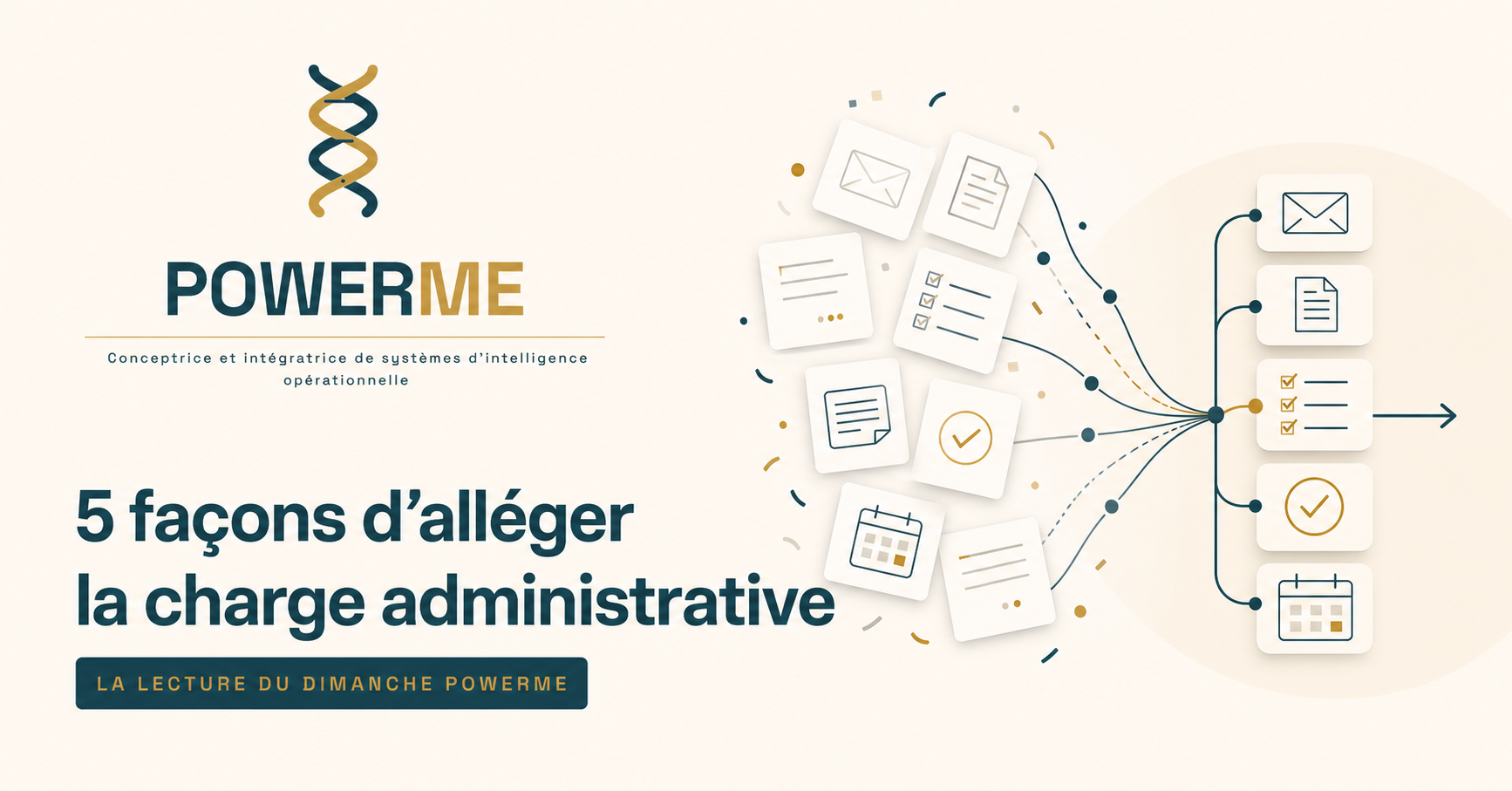
When administration takes over
Administrative overload rarely comes from one major task. It builds through accumulation: emails to process, documents to approve, information entered into several systems, missing details to track down and routine decisions that interrupt managers. Gradually, the team spends more time organizing the work than serving clients, solving problems and moving the business forward. The answer is not to ask everyone to work faster. It is to organize administrative work so that it moves with less effort, fewer interruptions and greater clarity.
1. Create one clear entry point for each request
Confusion often begins when work arrives through too many channels. A request may come by email, phone, text message, paper note or an informal conversation. Someone must then gather the information, decide who should act and remember the follow-up. Instead, define one entry point for each type of request. A veterinary clinic can coordinate appointment requests, client information and follow-ups through one process. A hotel can centralize guest requests, maintenance issues and special requirements. The goal is not necessarily to use one application for everything, but to ensure that every request has a known entry point and a visible next step.
- New requests use a defined form
- Documents are stored in the same place
- Maintenance issues are recorded in one system
- Approvals follow a known process
- The team uses a shared list of active tasks
2. Remove steps that no longer add value
Before making a process faster, confirm that every step is still necessary. Some businesses produce reports no one reads, request approvals that rarely change the decision or enter the same information into several tools. Removing one unnecessary step creates lasting time savings. A good platform should not simply execute every existing task more quickly. It should also help the business recognize which tasks can be simplified, combined or removed.
- Does anyone actually use this information?
- Is this approval necessary?
- Is the same information entered more than once?
- Could two forms become one?
- Could a meeting become a clear written update?
- Is a qualified employee spending time on work that does not require their expertise?
3. Standardize recurring work
Employees lose time when they must decide again how to complete a routine administrative task. A recurring process should have a simple structure: a starting point, an owner, a checklist or template, a deadline, approval rules and a clear next step. This structure can support new-client onboarding, appointment preparation, billing, employee onboarding, supplier requests or incident reports. Standardization does not remove human judgment. It prevents the routine part of the work from being reinvented every time, leaving attention available for situations that genuinely require experience.
- A clear starting point
- One responsible owner
- A checklist or template
- A deadline
- Approval rules
- A defined next step
4. Escalate exceptions, not every task
Managers often become bottlenecks because too many routine decisions require their attention. A better system allows normal situations to move forward under established rules. The manager becomes involved when a case is unusual, sensitive or important. This is not about losing control. It is about receiving a clear, prioritized view of what genuinely requires judgment. Instead of responding to dozens of scattered messages, managers can focus on exceptions affecting service, finances, privacy, safety, quality or reputation.
- An unhappy client
- A missing or contradictory document
- An unusual refund request
- A scheduling conflict
- A privacy or security concern
- A decision above a financial threshold
- A situation affecting safety, quality or reputation
5. Protect the time you give back to the team
Reducing administrative work creates value only when the recovered time is used intentionally. Consider a simple scenario: a new method frees several hours in an employee’s week. If those hours are immediately filled with other administrative requests, the pressure does not fall. Decide with the team where that capacity should go. The people doing the work often know which important responsibilities are being neglected because administration takes up too much space. The recovered time can improve service, prevent recurring problems, support colleagues or make it possible to prepare for the next day more calmly.
- Serving clients, patients or guests
- Resolving complex situations
- Improving service quality
- Supporting colleagues
- Strengthening client relationships
- Preventing recurring problems
- Preparing for the next day
A platform should organize work, not create more of it
The right platform does more than speed up isolated tasks. It gives the business a shared way to move work forward. Requests arrive through a clear channel. Responsibilities are visible. Recurring tasks follow a consistent process. Employees know what requires their attention, and managers can see exceptions without supervising every step. The desired result is not more activity or more notifications. It is more time for the work that clients, patients or guests truly value.
The POWERME perspective
POWERME helps service businesses organize administrative workflows around the way work actually happens. The goal is not to add a complicated system to an already overloaded team. It is to reduce friction, clarify responsibilities and return useful time to employees and managers. The best measure of an effective platform is not everything it enables people to do. It is how much unnecessary work it helps remove.
Useful adoption starts with the right question.
Which process adds the most pressure to your team today?
Request a free consultation